When I crossed the swim leg at Ironman Cairns, things were going well.
In fact, I was third in my age group out of the water and feeling strong.
But endurance sport has a way of reminding us that things can change quickly.
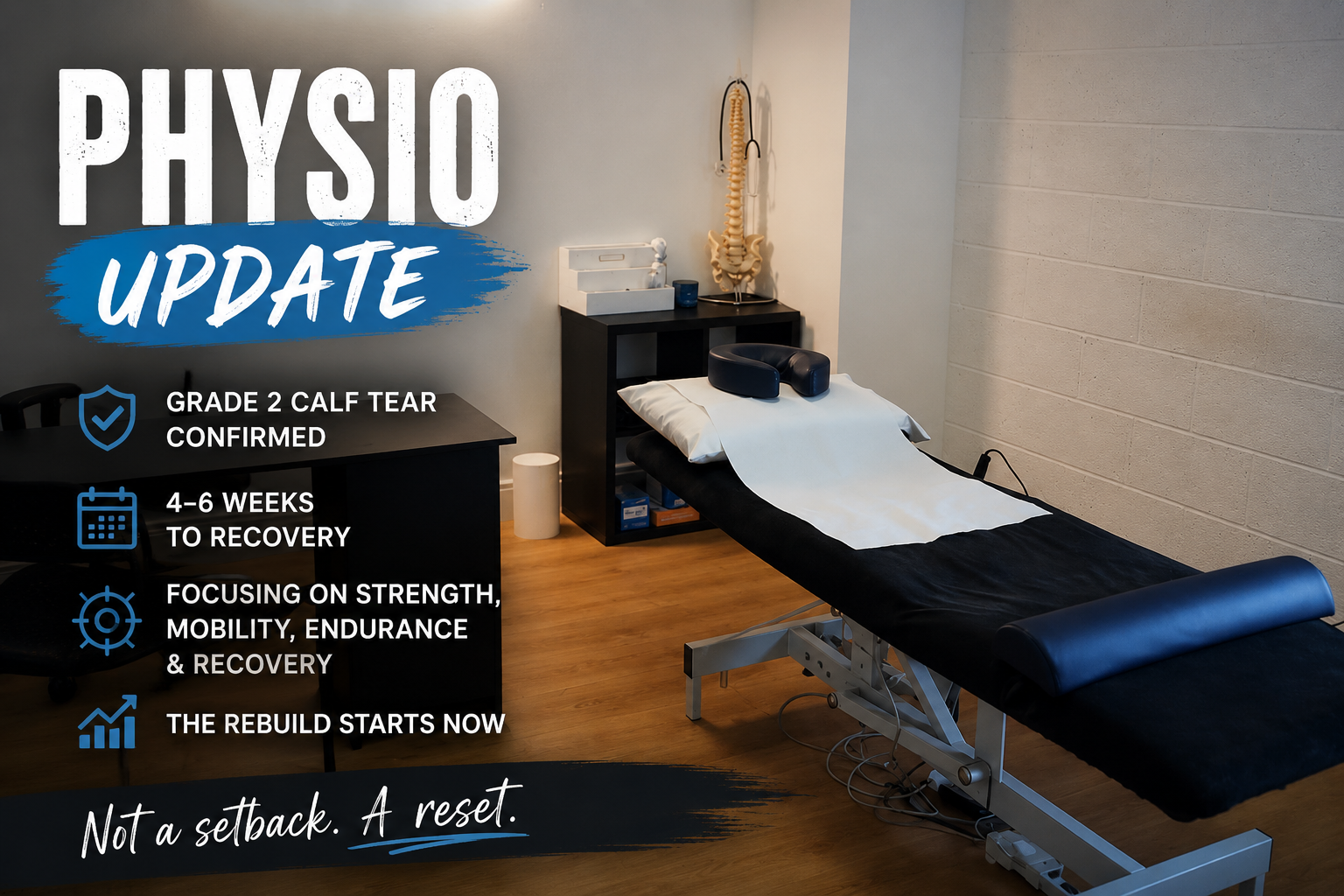
Unfortunately, my race ended early with what has now been confirmed as a Grade 2 tear in my right calf.
While a DNF is never part of the plan, sometimes our greatest lessons come from the races we don't finish.
And this one may have been the most important race of my career — not for how it ended, but for what it started.
The Physio Results
After returning home to Brisbane, I visited the physio for a full assessment.
The diagnosis confirmed a Grade 2 tear, but there was some encouraging news too.
The expected recovery timeframe is 4–6 weeks, and with the correct rehabilitation plan, I should make a full recovery.
But perhaps the biggest takeaway wasn't the calf itself.
The physio identified an underlying pelvic imbalance, which likely contributed to the injury in the first place.
It's a timely reminder that injuries are often the symptom of something happening elsewhere in the body.
The calf wasn't the problem — it was the warning sign.
The Plan Moving Forward
For the next two weeks, training will look very different.
The focus is on recovery first, everything else second.
The plan is simple:
- Two weeks of complete rest from structured training
- Gradually reintroduce cycling and swimming
- Begin a structured strength and conditioning program
- Address the pelvic imbalance with targeted rehab
- Build a more resilient body for the road ahead
As athletes — especially those of us over 50 — we sometimes fall into the trap of thinking that more training is always better.
The reality is often the opposite.
Longevity requires balance.
A New Philosophy After 50
Ironman Cairns has reinforced something I've been thinking about for quite some time.
My goal is no longer simply to complete races or chase personal bests.
It's about building a body that remains strong, healthy and capable for decades to come.
Moving forward, my training will be built around four pillars:
🏋️ Strength
Building muscle and maintaining functional movement becomes increasingly important as we age. It's not optional — it's essential.
🧘 Mobility
Good movement patterns reduce injury risk and help us continue doing the activities we love, for longer.
🏊 Endurance
Endurance training will always remain a key part of my life — but it can no longer come at the expense of overall health.
😴 Recovery
Recovery is no longer something that happens between training sessions.
Recovery is training.
It's Not a Setback — It's a Reset
At 57, I've realised something important.
The goal isn't to prove how hard we can push ourselves.
The goal is to create a lifestyle that allows us to stay active, adventurous and healthy for many years to come.
This injury may have ended one race, but it may have also pointed me towards an even bigger purpose.
If this experience helps even one person over 50 rethink their approach to health, training and longevity — then perhaps the DNF was worth it.
The rebuild starts now.
Follow along as I document the journey of staying fit, healthy and adventurous after 50 — the successes, the setbacks and everything in between.
— Des Brisbane, Australia