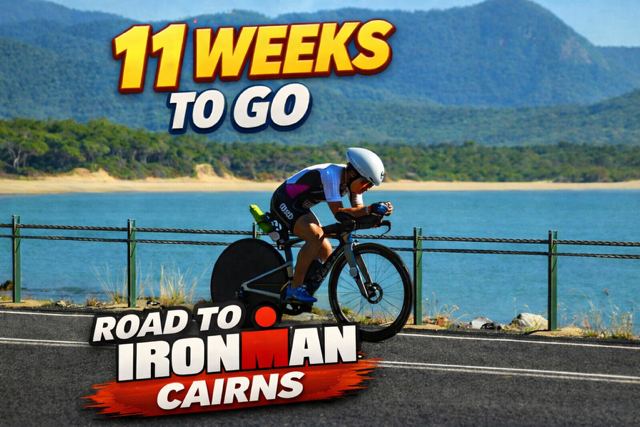
With 11 weeks to go until Ironman Cairns 2026, the training is starting to feel very real.
This is the phase where the work begins to accumulate, fatigue starts to build, and consistency becomes more important than ever. It's also the point in an Ironman build where you need to carefully walk the line between building fitness and avoiding overtraining.
For those new to the journey, I'm Des Trindall — a 57-year-old triathlete based in Brisbane, Australia, preparing for Ironman Cairns in June 2026. These weekly recaps are not only a record of my training but also a way to share insights from over 40 years in the sport and hopefully help others along their own endurance journey.
Training Structure – 11 Weeks to Go
Typically, I follow a 3-week build and 1-week recovery structure. However, with the Moreton Bay Triathlon coming up in May, I've adjusted slightly to a 4-week build followed by recovery leading into that race.
This week marked Build Week 1 — approximately a 12-hour training week. Not overly heavy, but enough to start building fatigue and preparing the body for the bigger weeks ahead.
Monday – Recovery and Work Balance
The week started with a 60-minute Zone 1 recovery ride — just rolling the legs over and keeping things easy. These sessions are critical for recovery and maintaining consistency.
This was followed by a late work shift (2pm–10pm), which meant managing energy and recovery carefully heading into the rest of the week.
Tuesday – Zone 2 Ride with Ironman Efforts
Tuesday morning included:
- 90-minute Zone 2 ride
- 2 × 4-minute Ironman power efforts
These short efforts are designed to:
- Introduce race-specific load
- Build muscular endurance
- Avoid excessive fatigue
This is about teaching the body to handle Ironman power comfortably without compromising the rest of the training week.
Wednesday – Double Session Day
Wednesday was a key training day with two quality sessions.
Morning: Run
- 90-minute Zone 2 run
At this duration, nutrition becomes important. Once runs reach 90 minutes, practising fuelling from the 15–20 minute mark becomes essential — exactly the habits you need locked in before race day.
Lunchtime: Swim
- 2,500m swim
- Main set: 20 × 200m
- Rest intervals reduced from 45 seconds to 30 seconds
The focus here was building endurance and improving sustained swim pacing. Rest intervals will reduce further as fitness improves.
Thursday – Listening to the Data
Thursday was meant to be a big session:
- 90-minute indoor ride
- 3 × 18 minutes at Ironman power
However, the morning data told a different story:
| Metric | Status |
|---|---|
| HRV | Unbalanced |
| Fatigue signals | Accumulating |
| Recovery indicators | Conflicting |
Instead of forcing the session, I adjusted to a 90-minute Zone 1–2 ride.
This is a great example of training smart, not just training hard. The goal is consistency, not hero sessions.
Friday – Full Rest Day
Despite being in a build week, I chose to take a full rest day.
This decision was based on:
- Accumulated fatigue
- Work schedule demands
- Preparing for the weekend endurance work
Sometimes the smartest training decision is knowing when not to train.
Saturday – Endurance Focus (Double Session)
Morning: Bike
- 3 hours 30 minutes Zone 2 ride
Key focus areas:
- Steady power output
- Controlled climbing effort
- Nutrition every 15 minutes
- Building gut tolerance
| Metric | Current | Target |
|---|---|---|
| Carbs per hour | ~70g | 90g+ |
Fuelling targets will continue to increase as training progresses.
Afternoon: Swim
- 2,500m endurance swim (wetsuit simulation)
Swimming in a 28°C heated indoor pool helps simulate Cairns race conditions, particularly when wearing a wetsuit in warm water. This weekly endurance swim will gradually build toward 4,000m as race day approaches.
Sunday – Early Run Before Work
Sunday included a 60-minute Zone 2 run — and this session highlighted one of the key benefits of consistent Zone 2 training:
- Lower heart rate at the same pace
- Faster pace at the same effort
- Improved aerobic efficiency across the board
At this stage, my Zone 2 pace is now within 20–30 seconds per kilometre of expected Ironman marathon pace — a very encouraging sign at 11 weeks out.
This improvement is the result of:
- Consistency — showing up day after day
- Patience — trusting the process
- Controlled intensity — not chasing pace in every session
Exactly what long-course triathlon demands.
Weekly Summary
| Metric | Value |
|---|---|
| Total Training Time | ~12 hours |
| Phase | Build Week 1 |
Key Takeaways – 11 Weeks to Go
This week reinforced several important principles:
Consistency over hero sessions — Building sustainable fitness is more valuable than occasional big efforts. One modified session doesn't derail a training block.
Listen to recovery signals — Adjusting sessions based on HRV and fatigue prevents setbacks. The data doesn't lie.
Zone 2 works — Aerobic training continues to improve pace and efficiency. The results are showing up in every run.
Nutrition practice matters — Fuelling during training builds race-day confidence. You can't wing nutrition on Ironman day.
Looking Ahead
Over the next few weeks:
- Training volume will increase
- Fatigue will accumulate
- Recovery becomes critical
This is the fine line all Ironman athletes must walk: build fitness without tipping into overtraining.
With 11 weeks to go, the foundation is now in place… and the real race-specific work begins.
Because it's not just about race day — it's about the journey getting there.
If you're building toward your own Ironman or long-course event, check out my training plans or get in touch for personalised coaching.