If you've been training for triathlon recently, you've probably asked yourself:
"What should I actually be using to train — heart rate, power, or pace?"
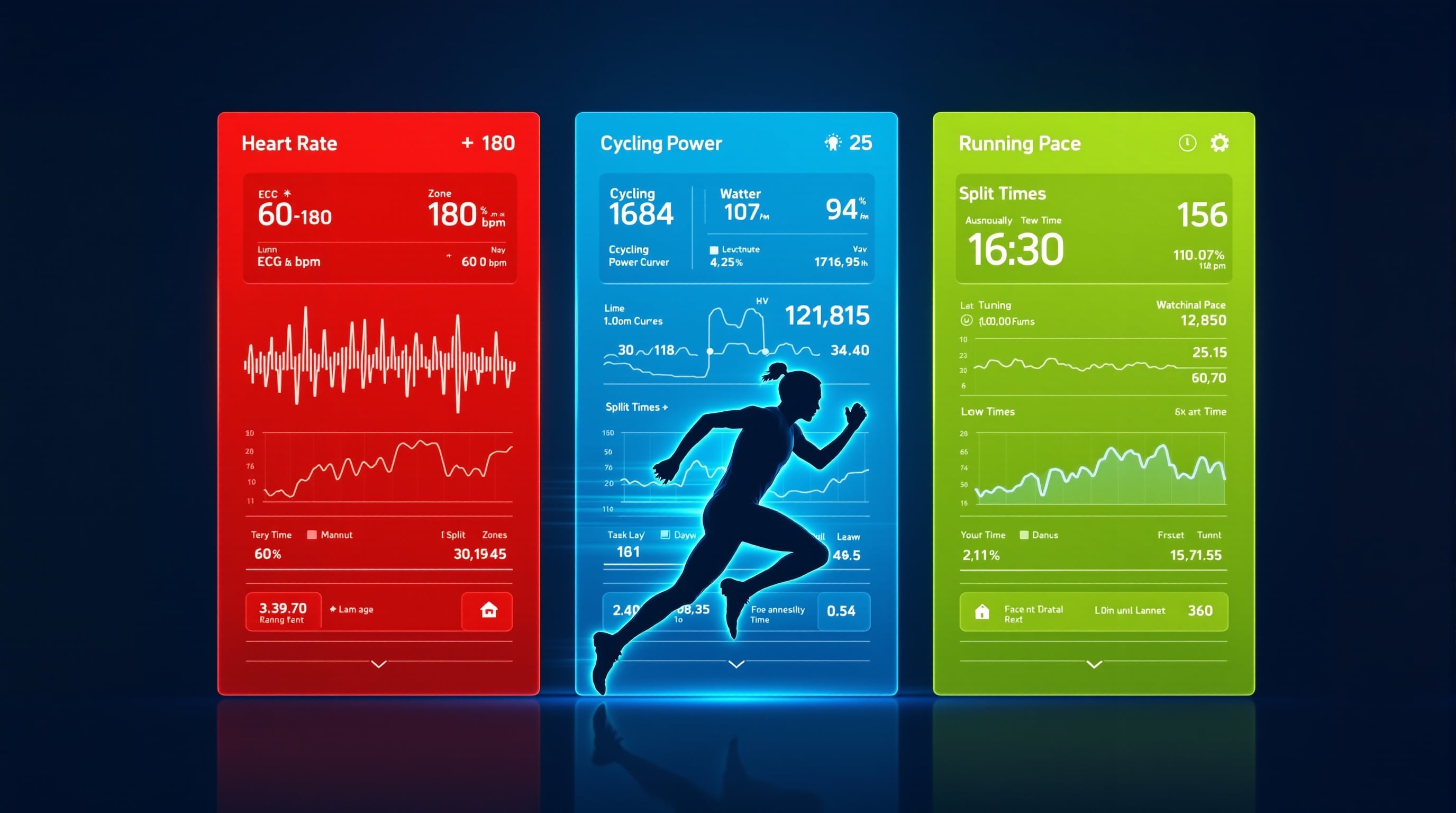
With all the technology available today, it's easy to feel overwhelmed. Your Garmin gives you heart rate and HRV. Your bike shows power. Your run shows pace.
But here's the truth:
None of them are perfect on their own.
The smartest triathletes in 2026 aren't choosing one — they're learning how to use each one properly.
Understanding the 3 Metrics
1. Heart Rate (Your Internal Effort)
Heart rate tells you what's happening inside your body.
It reflects effort level, fatigue, hydration, and heat stress.
| Pros | Cons |
|---|---|
| Great for endurance (Zone 2 work) | Slow to respond (lag) |
| Keeps you from going too hard | Affected by heat, stress, caffeine |
| Perfect for long runs and aerobic rides | Can drift over time |
Heart rate is your governor, not your accelerator.
(Want to know your zones? Use our free HR Zone Calculator.)
2. Power (Your True Output – Bike)
Power measures exactly how hard you're working. No guessing.
| Pros | Cons |
|---|---|
| Instant feedback | Bike only (for most athletes) |
| Not affected by weather or fatigue | Doesn't tell you how your body feels |
| Perfect for structured sessions | Can push you too hard if you ignore fatigue |
Power is your precision tool.
3. Pace (Your Outcome – Run)
Pace shows your actual speed — what you're producing right now.
| Pros | Cons |
|---|---|
| Simple and race-relevant | Affected by terrain, heat, fatigue |
| Easy to track progress | Doesn't reflect internal effort |
| Key for race execution | Can lead to overcooking it on easy days |
Pace is your result metric, not your guide.
So… Which One Should You Use?
Here's the honest answer: it depends on the session.
But here's the smarter way to think about it:
The Modern 2026 Approach (What Smart Athletes Do)
Bike Training
Use power as your primary metric. Cross-check with heart rate.
| Target | Check |
|---|---|
| Ride at 180W (Ironman power) | Is HR staying in Zone 2–3? |
If HR drifts too high at the same power → you're overcooking it, fatigued, or dehydrated.
Run Training
Use heart rate for easy runs. Use pace for intervals and race prep.
| Session Type | Primary Metric | Secondary |
|---|---|---|
| Easy / long run | Heart rate (Zone 2) | Pace as reference |
| Intervals | Pace (targets) | HR to confirm effort |
| Race simulation | Both aligned | Practise execution |
Race Day Execution
This is where it really matters.
Bike (Ironman / 70.3)
Ride to power, monitor heart rate.
- Power keeps you disciplined
- HR tells you if you're overheating or fading
Run
Start with heart rate, then manage pace.
- First half → controlled HR
- Second half → hold pace if possible
This is where durability shows up — the athletes who execute the second half well are the ones who controlled the first half.
Where Most Athletes Get It Wrong
This is important.
- ❌ They chase pace on easy days — turning recovery into moderate effort
- ❌ They ignore heart rate drift — not recognising early signs of fatigue
- ❌ They ride to ego instead of power — trying to keep up with faster riders
- ❌ They train hard… but not smart — more volume without better execution
Result? They fall apart late in races.
The Key Insight
Each metric answers a different question:
| Metric | Question It Answers |
|---|---|
| Power | What am I doing? |
| Heart Rate | How is my body responding? |
| Pace | What result am I getting? |
The magic happens when you combine all three.
When power is steady, HR is stable, and pace is consistent — that's an athlete in control. When those numbers start diverging, something needs attention.
How This Applies to You (Real-World Example)
For someone training for Ironman Cairns:
| Session | How I Use the Metrics |
|---|---|
| Long ride | Steady power, stable HR — if HR drifts, back off |
| Long run | Controlled HR, monitor pace drop — minimal drift = durability |
| Intervals | Structured power/pace targets — HR confirms effort level |
| Brick run | HR to settle in, then find pace — teach the body to transition |
This is how you build race-day control — not just fitness.
(This is also why I advocate for training by time, not distance — it lets you adjust based on what the metrics are telling you on any given day.)
Final Thought
In 2026, triathlon isn't about training harder.
It's about training smarter.
Stop trying to pick the "best" metric. Instead:
- ✅ Use power for precision — know exactly what you're producing
- ✅ Use heart rate for control — keep your body in check
- ✅ Use pace for execution — deliver the result on race day
Because the athletes who understand this…
…are the ones running past people late in the race.
Ready to dial in your training metrics? Start with our free HR Zone Calculator to know your zones, then explore our HRV Guide to understand your recovery data. Want a structured plan that puts all of this together? Check out our training plans or get in touch for personalised guidance.