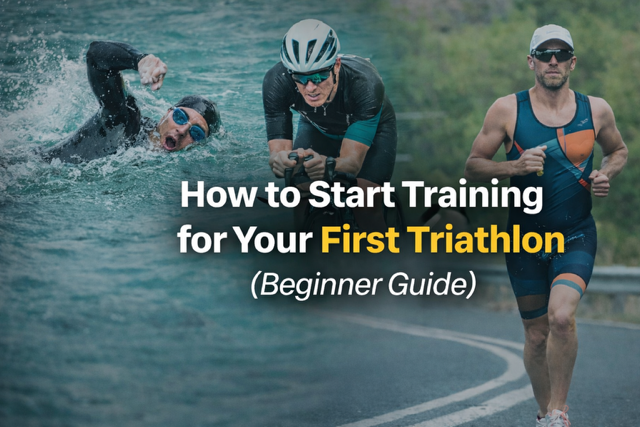
Starting your first triathlon can feel overwhelming.
Three sports. Gear. Training plans. Nutrition. Race day nerves.
But here's the truth — triathlon is one of the most achievable endurance sports you can take on, even as a complete beginner.
After more than 40 years in triathlon, I can tell you that most beginners overcomplicate things. The key is to start simple, stay consistent, and build gradually.
Here's how to get started.
Step 1 — Choose Your First Triathlon Distance
If this is your first triathlon, I strongly recommend starting with a Sprint Distance.
| Component | Typical Sprint Distance |
|---|---|
| Swim | 400–750m |
| Bike | 15–20km |
| Run | 4–5km |
Why Sprint is ideal for beginners:
- Achievable with modest fitness
- Lower injury risk during preparation
- Faster recovery after the race
- Builds confidence for longer events
You can always move up to Olympic distance or longer events later. The biggest mistake beginners make is jumping straight into a long event. Build experience first.
Step 2 — Focus on Consistency (Not Perfection)
You don't need to train every day.
A simple beginner structure works brilliantly:
| Day | Session |
|---|---|
| Monday | Swim |
| Tuesday | Run |
| Wednesday | Bike |
| Thursday | Swim |
| Friday | Rest |
| Saturday | Bike |
| Sunday | Run |
That's 6 sessions across 3 disciplines — and it's enough to get you to your first triathlon.
Consistency beats intensity every time — especially for beginners. Showing up regularly matters far more than any single hard session.
Step 3 — Build Your Aerobic Base First
One of the biggest mistakes beginners make is training too hard, too often.
Most of your training should feel:
- Comfortable — you shouldn't be gasping for air
- Controlled — steady effort, not racing every session
- Conversational — you should be able to hold a conversation
This is called Zone 2 training, and it builds your endurance foundation while significantly reducing injury risk.
In my own training — even preparing for Ironman at 57 — I still do 80–85% of my sessions at easy aerobic effort. This is the foundation that allows you to improve safely and sustainably.
Step 4 — Don't Worry About Expensive Gear
You don't need fancy equipment to start triathlon. Here's all you really need:
| Discipline | Essential Gear |
|---|---|
| Swim | Swimsuit + goggles |
| Bike | Any road bike (or basic bike to start) + helmet |
| Run | Comfortable running shoes |
That's it.
You don't need aero helmets, carbon bikes, or expensive tri suits. Start simple. Upgrade later — once you know you love the sport and understand what gear will actually make a difference for you.
Step 5 — Learn Brick Sessions (Bike → Run)
One of the unique parts of triathlon is running immediately after cycling.
This feels strange at first — your legs feel heavy, awkward, and uncoordinated. It's completely normal, and it gets better with practice.
This is where brick sessions help.
Simple beginner brick:
- 30–45 minute bike ride
- Immediately followed by a 10–15 minute easy run
Just doing this once per week helps massively. Your legs learn to transition between disciplines, and that heavy feeling fades quickly over time.
Step 6 — Give Yourself 8–12 Weeks to Prepare
For most beginners, 8–12 weeks is ideal preparation time for a Sprint triathlon.
| Metric | Guideline |
|---|---|
| Preparation time | 8–12 weeks |
| Weekly training hours | 4–6 hours |
| Approach | Gradually increase duration |
| Focus | Consistency over intensity |
You don't need huge training hours. Many beginners finish their first triathlon training just 4–6 hours per week.
Yes — it's absolutely achievable.
Step 7 — Your First Goal Should Be to Finish
Your first triathlon is about:
- Learning — understanding transitions, pacing, and race flow
- Gaining experience — nothing replaces actually doing it
- Building confidence — proving to yourself that you can
Not speed.
Once you finish your first race, something amazing happens… you realise how achievable it is. And that's when the journey really begins.
Every single person who crosses that finish line — regardless of time — is a triathlete. And that feeling never gets old.
My Advice After 40+ Years in Triathlon
The best thing you can do is start.
Don't wait until you're fitter. Don't wait until you have better gear. Don't wait until you feel ready.
Triathlon will make you fitter, stronger, and more confident along the way. The sport meets you where you are — and takes you further than you ever thought possible.
Final Thought
You're not too old. You're not too slow. You're not too late.
Triathlon is one of the most rewarding journeys you can start — and your first race is just the beginning.
Start simple. Stay consistent. Enjoy the journey.
Ready to take the first step? Check out my free resources for training guides, nutrition tips, and race-day checklists. Or explore my beginner training plans to get a structured programme for your first race.