For most of my triathlon life, I trained the way nearly everyone did — I went out, rode hard, and used speed as my measure of how good the session was. If I was quick, it was a good ride. If I was slow, I assumed I was having a bad day.
It took me far too long to learn that speed is one of the most misleading numbers in cycling. These days, one of the biggest changes I recommend to the athletes I coach — especially those of us racing into our 50s and beyond — is simple: stop training by speed and start training with power.
Speed tells you how fast you're moving. Power tells you how hard you're working. Only one of those is actually under your control.
The Problem with Training by Speed
Speed feels like the obvious way to measure a ride, but it's affected by so many things that have nothing to do with your fitness. On any given day, your speed is influenced by:
- Wind — a headwind can make a strong effort look slow, and a tailwind can flatter a lazy one
- Hills and terrain — the same effort produces wildly different speeds up a climb versus along the flat
- Road surface — rough chip-seal robs you of free speed
- Tyre pressure and equipment — small mechanical differences add up
- Fatigue and temperature — a hot, tired day skews everything
You could ride at exactly the same effort two days in a row and see completely different average speeds. So if speed is constantly lying to you, what should you trust instead?
What Is Power, Exactly?
Power is measured in watts, and it tells you precisely how much work you're doing at any moment — regardless of wind, hills, or how tired you feel. A power meter sits on your bike (in the crank, pedals, or hub) and reports that number in real time.
Unlike speed, power doesn't care about the conditions. Two hundred watts is two hundred watts whether you're grinding up a climb into a headwind or spinning along the flat. That's what makes it the single most honest measure of your effort on the bike.
But Doesn't Heart Rate Do the Same Thing?
Heart rate is useful, and I still use it — but it isn't enough on its own. Heart rate is a response to effort, and it lags behind. It drifts with:
- Heat and dehydration
- Fatigue and poor sleep
- Caffeine and stress
- Cardiac drift over long efforts
Power, by contrast, is instant and objective. When you push harder, the number goes up immediately. The best approach is to use both together — power to control the effort, heart rate to understand how your body is responding to it. If you'd like to dial in your heart rate zones as well, my heart rate zone calculator is a good place to start.
Every Ride Should Have a Target
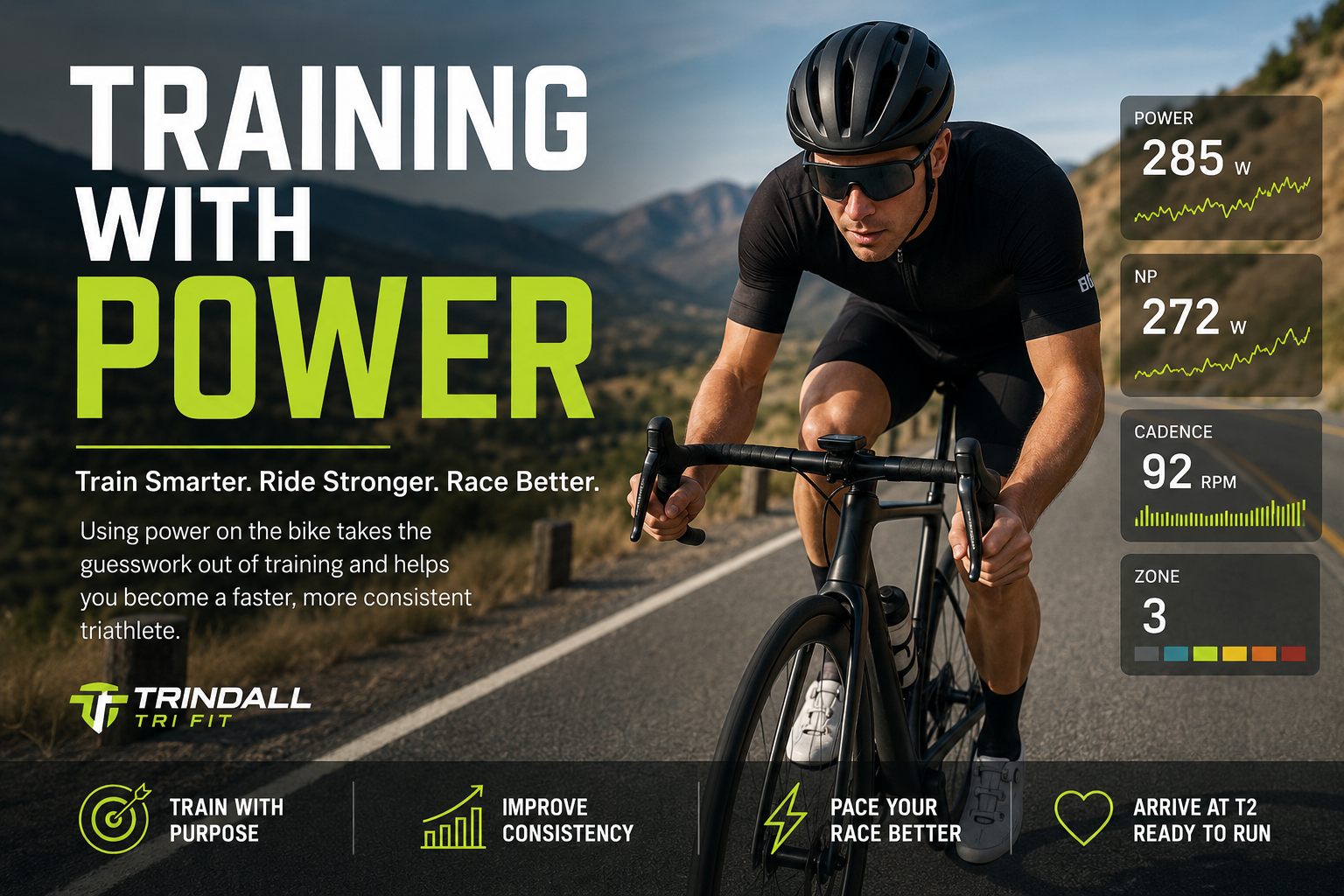
This is where power really changes your training. Once you know your FTP (Functional Threshold Power — roughly the highest power you can hold for about an hour), you can break your training into clear, purposeful zones. Suddenly every ride has a job to do.
| Zone | % of FTP | Purpose |
|---|---|---|
| Recovery | Under 55% | Easy spinning, active recovery |
| Endurance (Zone 2) | 56–75% | Building your aerobic base |
| Tempo | 76–90% | "Comfortably hard" sustained work |
| Threshold | 91–105% | Raising your FTP ceiling |
| VO₂ Max | 106–120% | Short, sharp, high-intensity efforts |
Instead of heading out and just riding "hard" or "easy", you ride with intent. An endurance day stays genuinely easy so you actually recover. A threshold session hits the right number so you get the adaptation you're chasing. No more accidental junk miles.
Why It Matters Even More for Triathletes
In a triathlon, the bike isn't the finish line — it's the middle. How you ride directly determines how you run. Go out too hard on the bike, chasing a fast split, and you'll pay for it on the run, every single time.
With power, you can set a target for race day and hold it precisely, no matter the terrain or wind. You ride the effort your body can actually back up with a strong run — not the effort your ego wants. For long-course racing especially, that discipline is the difference between a great day and a survival shuffle to the line.
The Biggest Lesson I've Learnt
The hardest thing power taught me was this: most of us ride our easy days too hard and our hard days too easy.
Before I trained with power, my "easy" rides were never quite easy, and my "hard" sessions were never quite hard enough. Everything blurred into the same grey middle. Power made that impossible to hide. It forced me to keep the easy days honestly easy — and to actually commit on the days that were meant to hurt.
Should Beginners Bother with a Power Meter?
Honestly? If you're serious about improving, the sooner the better. You don't need to be fast or experienced to benefit — you just need to want to train smarter. A power meter takes the guesswork out of it from day one and stops you building bad habits you'll only have to unlearn later.
That said, you don't need the most expensive setup on the market. A reliable single-sided power meter is more than enough to get started. If you're weighing up what to buy, I cover the gear I actually recommend in my triathlon gear guide.
It's Not About Riding Harder
This is the part people misunderstand. Training with power isn't about smashing yourself every session or chasing bigger numbers. It's about riding smarter — putting the effort exactly where it belongs, and backing off exactly when you should. Done well, power actually helps you rest better, because you can prove your easy days are easy.
Final Thoughts
Switching to power was one of the best decisions I've made in my cycling and triathlon training. It removed the guesswork, made my sessions genuinely productive, and — especially now, training in my late 50s — it's helped me get the most out of every hour without digging myself into a hole.
If you've been training by speed and wondering why your progress has stalled, a power meter might be exactly what you need. Train with intent, respect the easy days, commit to the hard ones, and let the numbers keep you honest.
If you'd like help setting your zones or building a bike program around power, book a free 30-minute consultation with me, or explore my free training resources to get started.
Do you train with power, or still riding by feel and speed? Drop a comment below — I'd love to hear what's held you back or what changed for you once you made the switch.