
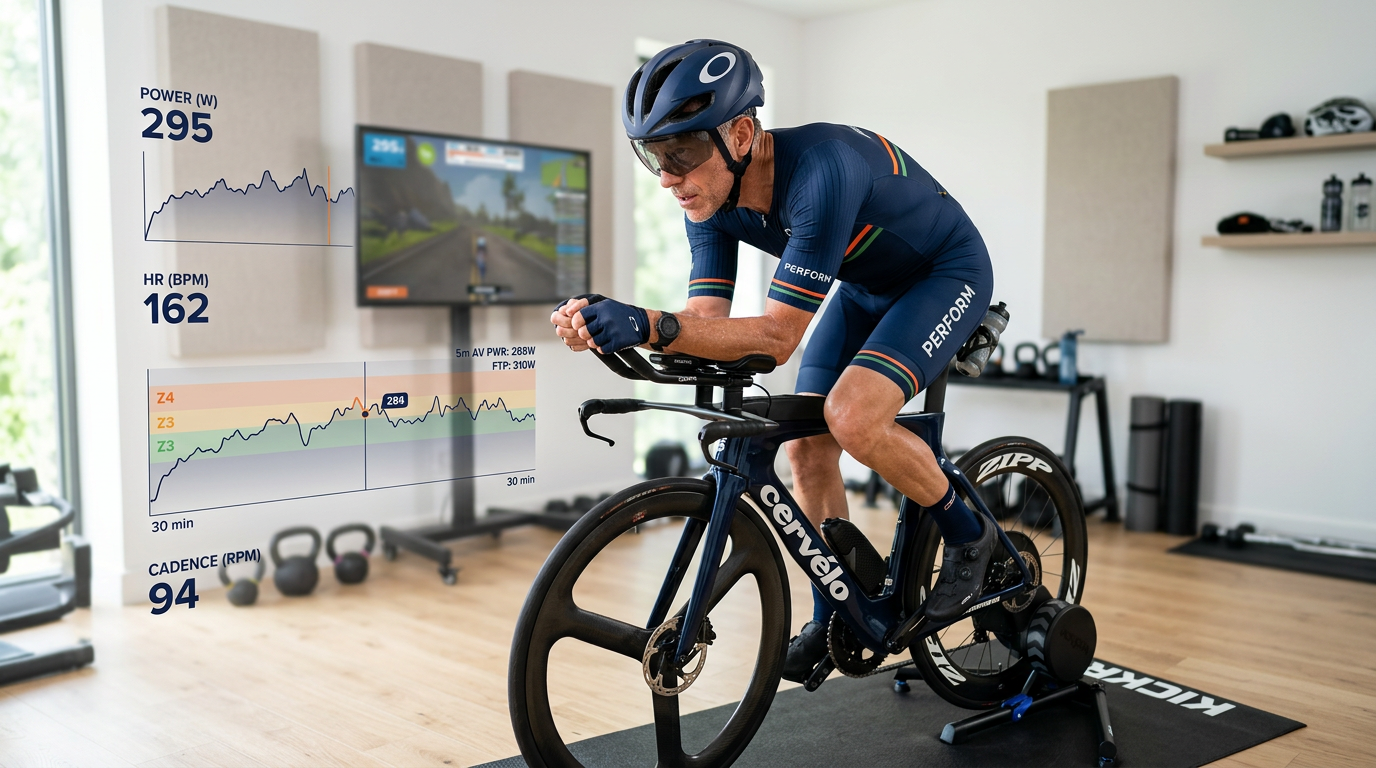
Triathletes love a good number, and lactate testing produces some of the most interesting numbers in endurance sport.
But here's the thing I want every age-group and masters athlete to understand before they get too attached to a single reading:
Lactate is not simply a waste product, and a single mmol/L value is not a universal training zone.
Used well, lactate is a genuinely useful window into how your body responds to intensity. Used badly — as a magic number to chase — it can send your training in the wrong direction entirely.
I've pulled the key ideas from my new free guide, The Trindall TriFit Guide to Lactate & Training Zones, into this article. If you'd like the full version with a printable step-test worksheet, you can download the PDF here.
What lactate actually tells us
Lactate is produced and used continuously in the body. During exercise, the concentration in your blood reflects the balance between how much lactate is appearing, how it's transported, and how quickly it's cleared. As intensity rises, that balance shifts.
Measuring that response across a progressive test can help identify useful physiological landmarks for endurance training.
But the result is influenced by a lot of things: the test protocol, how long each stage lasts, how you sample, your nutrition, prior exercise, temperature — and the individual athlete. That's why copying someone else's "magic number" rarely works.
Think in three intensity domains
Rather than obsessing over exact numbers, I find it far more useful to think in three broad intensity domains:
| Domain | Physiology | Typical feel | Training purpose |
|---|---|---|---|
| Below LT1 | Lactate stays close to baseline | Easy / sustainable | Recovery, aerobic endurance, volume |
| LT1 to LT2 | Lactate rises but may remain controlled | Steady to hard | Tempo, race-specific aerobic work |
| Above LT2 | Rapid disturbance and rising lactate | Hard to very hard | Intervals and high-intensity stimulus |
You'll often see ~2 mmol/L linked to LT1 and ~4 mmol/L linked to a higher threshold. Treat those as reference conventions, not universal personal cut-offs. Different threshold methods produce different results.
LT1 — your aerobic anchor
LT1 is commonly identified as the first sustained rise in blood lactate above your low-intensity baseline. For a triathlete, it helps define the upper boundary of genuinely easy-to-moderate aerobic work.
Here's the practical bit: once you know your LT1, record the corresponding bike power or run pace, heart rate and RPE. Those become your day-to-day anchors. You don't need to prick your finger in every session — you just need to know what LT1 feels like and what numbers it lines up with.
This matters because a lot of athletes ride and run their easy sessions slightly too hard. Knowing where LT1 sits helps keep easy days genuinely easy — which is exactly what lets you hit your hard days hard.
LT2, MLSS and the upper boundary
The second lactate threshold identifies the higher transition where lactate accumulation accelerates. You may also hear about MLSS (maximal lactate steady state), which is related but requires prolonged constant-work testing — it is not the same as simply hitting 4 mmol/L.
Different threshold models use different definitions, so always record the method used when you compare tests. Otherwise you're comparing apples with oranges.
Lactate vs FTP: complementary, not competing
This is where a lot of confusion creeps in.
FTP is a practical performance construct — an estimate of sustainable cycling power. Lactate testing examines the physiological response to workloads. They're complementary tools, not rivals.
Two athletes can ride at the same percentage of FTP and experience completely different physiological stress.
That's exactly why fixed percentages don't always produce the same training stimulus between athletes — and why threshold testing can be so revealing. If you want to get more out of the power number itself, I've written separately about why every triathlete should train with power.
Turning a test into training
A lactate test is only valuable if it changes what you do. A few discipline-specific points:
- Swim: Lactate can be useful in controlled pool testing, but sampling logistics and sport-specific physiology mean swim thresholds should be assessed in swimming — not copied from the bike.
- Bike: Pair threshold workloads with power and heart rate for repeatable targets, and to clearly separate endurance work from tempo/threshold work.
- Run: Pair threshold results with pace and HR. Don't assume your cycling threshold heart rate or lactate response transfers directly to running — it usually doesn't.
For the masters athlete
Masters athletes can absolutely still train hard. The trick is to make the hard training purposeful while keeping the easy training easy enough to actually recover from.
Lactate testing can help you spot when an "easy" session is quietly drifting into a more demanding domain. But it should never replace attention to sleep, recovery, soreness, HR/HRV trends, illness, injury history and overall training load.
Here's the framework I use to keep sessions honest:
| Session | Primary anchor | Secondary check |
|---|---|---|
| Easy endurance | Below individual LT1 / appropriate power or pace | HR + conversational RPE |
| Tempo / race-specific | Individual response between thresholds | Power/pace + HR + RPE |
| Threshold | Workload near individually determined upper threshold | Power/pace + lactate trend + RPE |
| High intensity | Above upper threshold | Interval objective + power/pace + recovery |
If you're managing recovery closely — as most of us over 40 should be — my HRV guide pairs nicely with this framework.
A word on testing safely
If you want a formal threshold test, use a qualified sports scientist, exercise physiologist or appropriately trained practitioner. Blood sampling carries hygiene and infection-control considerations, and you should always follow the manufacturer's instructions for any lactate device.
The free PDF guide includes an educational example of how a progressive cycling step test is commonly structured, along with a printable worksheet to record power/pace, heart rate, lactate, RPE and test conditions. Consistency in how you test is what makes repeat testing genuinely useful.
This article and the guide are general educational information, not medical advice. Seek qualified professional guidance where appropriate, particularly if you have health concerns.
The bottom line
Don't chase a lactate number for its own sake.
Use testing to understand your response to intensity, connect that response to the practical metrics you can use every day — power, pace, heart rate, RPE — and then train according to the purpose of the session.
Train with purpose. Recover with purpose. Adapt.
Grab the free guide: The Trindall TriFit Guide to Lactate & Training Zones — including the printable step-test worksheet.
Want help turning your numbers into a plan that actually fits your life? Book a free intro call and let's talk.
Do you test your lactate, or rely on power, pace and feel? I'd love to hear how you set your zones in the comments below.
Coach Des Trindall Trindall TriFit Training should fit around your life — not the other way around.