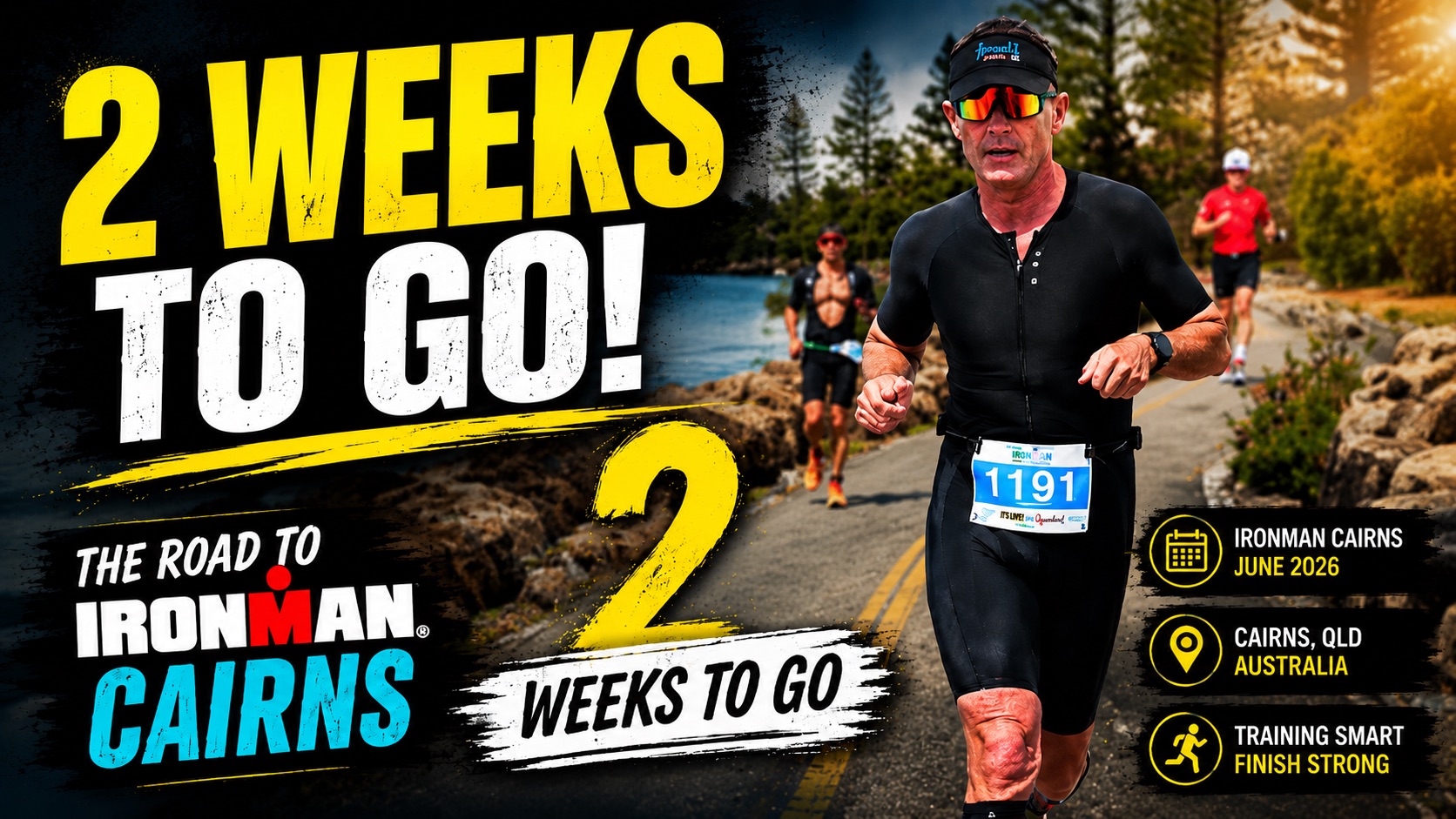
With just two weeks remaining until Ironman Cairns, my preparation wasn't exactly what I had planned.
In an ideal world, the final weeks before an Ironman are all about confidence-building sessions, race-specific preparation, and putting the finishing touches on months of hard work.
Instead, I found myself making one of the toughest decisions endurance athletes ever face:
To stop running completely.
And surprisingly, it may have been the smartest decision of my entire Ironman build.
The Work Is Already Done
One of the biggest mistakes athletes make before a major race is believing they can still gain significant fitness in the final two weeks.
The reality is different.
By this stage, the training that will determine your race-day performance has already been completed.
The long rides. The endurance runs. The early morning swims. The interval sessions. The months of consistency.
They're already in the bank.
The final two weeks are not about gaining fitness. They're about protecting it.
If you missed last week's post on why the taper makes you feel terrible, read Tapering: Why You Feel Anxious, Tired, and Like Crap — it explains exactly what's happening in your body right now.
When a Calf Tightens 14 Days Before an Ironman
On Sunday, I had planned a 90-minute run.
Around 50 minutes into the session, my right calf tightened again.
It wasn't a catastrophic injury. It wasn't severe enough to stop me immediately.
But it was enough to tell me something wasn't right.
At that moment, I had a choice:
- Push through and hope for the best
- Stop, reassess, and think long-term
I chose the second option.
When I sat down and looked at the situation objectively, the risk-versus-reward calculation became obvious:
| Factor | Push Through | Stop Running |
|---|---|---|
| Fitness gain | Minimal — it's already banked | None needed |
| Injury risk | High — calf could tear | Eliminated |
| Race-day impact | Could DNS entirely | Arrive healthy |
| Aerobic maintenance | Maintained | Maintained via swim/bike |
| Mental confidence | Short-term boost, long-term anxiety | Peace of mind |
The answer was clear.
Why I Stopped Running Completely
After weighing up the options, I made the decision to eliminate all running from the final two weeks before the race.
For some athletes, that may sound extreme.
For me, it made perfect sense.
- I knew I could maintain my aerobic fitness through swimming and cycling
- I knew the fitness required to complete the marathon had already been built
- Most importantly, I knew that continuing to test an unhappy calf carried unnecessary risk
At 57 years of age, recovery is different.
You learn that being brave isn't always about pushing harder. Sometimes it's about having the discipline to back off.
This is something I've seen time and again with the athletes I coach — the ones who race well aren't always the ones who trained the hardest in the final weeks. They're the ones who arrived healthy. If you're navigating a similar situation, get in touch for a free 30-minute training review.
Life Doesn't Stop Because You're Training
Another challenge during the week was completing a five-day Lead Auditor accreditation course in Brisbane.
That meant:
- Leaving home around 7:00am
- Full days in the classroom
- Returning home around 6:00pm
- Managing fatigue from both training and study
Normally, I might have worried about missing sessions.
This time I didn't.
Because I understood the purpose of this phase of training.
The goal wasn't to build fitness. The goal was to arrive healthy.
That mindset made it much easier to adapt the schedule and focus on quality rather than quantity.
Small Sessions Still Matter
Although the overall training volume dropped significantly, I still made sure to keep the body moving.
Indoor Bike Sessions
Several short rides on the ROUVY version of the Ironman Cairns course helped maintain cycling fitness while allowing the calf to recover.
These weren't hard sessions. They were simply enough to keep the legs turning and the body engaged.
Swim Training
Swimming became a key focus during the week.
One session involved a simple 2km endurance swim before heading to the train. Another included:
| Set | Details |
|---|---|
| Warm-up | 400m easy freestyle |
| Main set | 15 × 100m at slightly above Ironman race pace |
| Recovery | Full rest between efforts |
| Goal | Confidence and feel for the water — not speed |
If you want to understand how wetsuit swimming changes the equation for open water, check out Swimming in a Wetsuit: What Every Triathlete Needs to Know.
The Week at a Glance
| Day | Session | Purpose |
|---|---|---|
| Monday | 2km easy swim | Aerobic maintenance |
| Tuesday | ROUVY Cairns course (easy) | Leg turnover, course familiarity |
| Wednesday | Rest | Recovery + study |
| Thursday | 15 × 100m swim set | Race-pace confidence |
| Friday | ROUVY easy spin | Keep legs moving |
| Saturday | Rest | Full recovery |
| Sunday | Easy swim + short spin | Light movement only |
The Di2 Lesson Everyone Should Learn
One of the more entertaining moments of the week came during my final long ride before race week.
Five minutes into the ride, the front derailleur stopped working.
Thirty minutes later, I was effectively locked into one gear.
The culprit? A flat Shimano Di2 battery.
Fortunately, it happened in training and not on race day.
The lesson is simple:
Charge your Di2. And then charge it again.
If you race with electronic shifting, make checking your battery part of your race-week checklist. It's a small detail that can prevent a very frustrating day.
While you're at it, here's a quick race-week equipment checklist:
| Item | Check |
|---|---|
| Di2 / eTap battery | Fully charged |
| Bike computer | Charged + courses loaded |
| Tyres | Inspected for wear + correct pressure |
| Chain | Cleaned and lubed |
| Spare tubes / CO2 | Packed — know how to fix a flat |
| Wetsuit | Tried on + no damage |
| Race kit | Laid out + comfortable |
| Nutrition | Tested — nothing new on race day |
Trusting the Process
As race day approaches, there is always a temptation to do more.
One more run. One more hard bike session. One more opportunity to prove you're ready.
But confidence doesn't come from squeezing extra training into the final two weeks.
Confidence comes from trusting the work you've already completed.
The truth is that nothing I do now will dramatically improve my fitness. But poor decisions could absolutely compromise race day.
So the focus remains simple:
- ✅ Stay healthy
- ✅ Protect the calf
- ✅ Maintain fitness through swim and bike
- ✅ Arrive fresh
- ✅ Trust the process
If you're in the same boat — two weeks out from a race with a niggle that won't settle — remember this:
The bravest decision isn't always to push through. Sometimes it's to back off.
Looking Ahead to Ironman Cairns
After months of preparation, the countdown is nearly over.
The season has already exceeded expectations — nine races and nine podium finishes, a Queensland Triathlon Series age-group title, and qualification for the Australian Age Group Team heading to the World Championships in Pontevedra, Spain.
Now the focus shifts to one final challenge.
Ironman Cairns. June 14, 2026.
The work is done. The fitness is banked. Now it's time to arrive healthy and give myself the best possible chance of reaching that finish line.
See you in Cairns.
Navigating your own taper or race-week decisions? Whether it's your first triathlon or your fiftieth, I offer a free 30-minute training review to help you make the right calls when it matters most.
Related Reading: