One of the unexpected things about life after 50 is that you quickly realise you don't have to have all the answers.
Sometimes the smartest thing you can do is simply ask for help.
From Horse Truck to Triathlon Adventure Vehicle
Behind us sits our 2004 Volkswagen LT46. For many years, it wasn't a campervan at all. It was our horse truck.
Back when we were training racehorses, this truck was part of our daily routine — transporting horses to track work and race meetings across Queensland.
When we stopped training horses, we decided to keep the truck and give it a whole new purpose.
Instead of selling it, we converted it into a campervan and adventure vehicle.
Today, we actually use it more for triathlon than anything else.
Why a Campervan Is a Triathlete's Secret Weapon
If you've ever raced a triathlon, you know the early starts. The 3:00am alarms. The frantic packing. The long drive in the dark hoping you haven't forgotten anything.
Our truck solves all of that.
For most races, we drive up the night before and park close to transition. When the alarm goes off at 4:30am, we're already there — rested, calm, with everything we need within arm's reach.
| Race Weekend Without the Truck | Race Weekend With the Truck |
|---|---|
| 3:00am alarm, 2-hour drive | Wake up already at the venue |
| Scramble to pack everything | Everything's already set up |
| Arrive stressed and tired | Arrive rested and relaxed |
| Fast food on the road | Familiar meals, prepped in advance |
| Rush home post-race | Recovery meal ready, shower on board |
| No place to rest after finishing | Lie down, refuel, decompress |
It's become a genuine competitive advantage — especially as a masters athlete where recovery and sleep quality matter more than ever.
If you want more tips on making race weekends stress-free, check out Travelling to Your Next Triathlon: 9 Essential Tips.
The Problem We Didn't Expect
After a recent weekend away in Toogoolawah, we drove through a local weigh station while everything was still loaded.
The result shocked us.
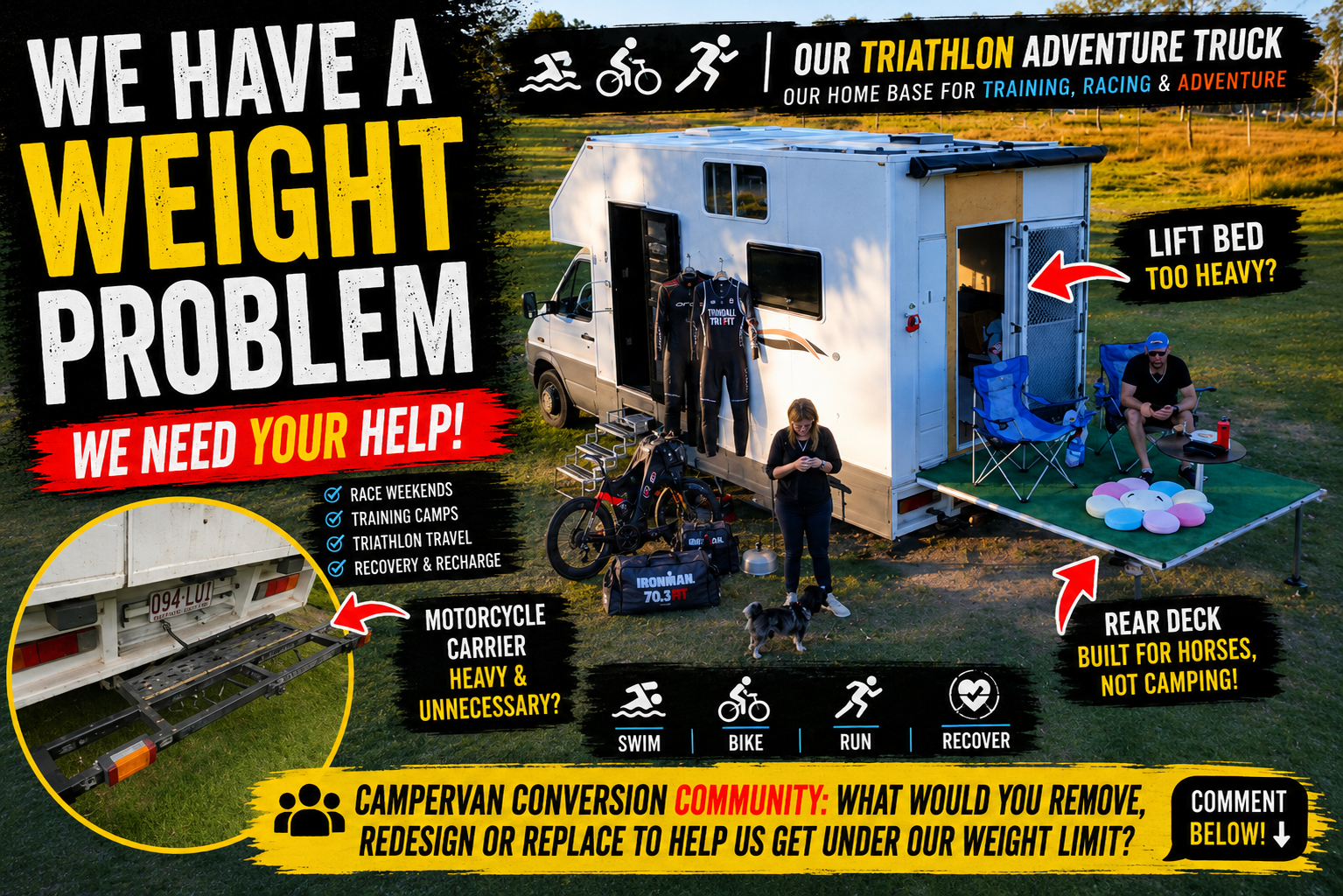
We're a few hundred kilograms over our allowable weight limit.
That's not something we can ignore.
Aside from the obvious safety concerns, being overweight could create serious insurance issues if we were ever involved in an accident.
So now it's time to make some decisions.
Where We Think the Weight Is Hiding
We've identified three main areas where we believe significant weight can be saved:
| Area | Current Issue | Potential Solution |
|---|---|---|
| Electric elevator bed | Built with heavy timber and steel | Rebuild using lightweight aluminium or composite materials |
| Motorcycle carrier | Bolted to the rear — never actually used | Remove entirely |
| Rear deck | Originally designed for horses — massively overbuilt | Redesign using lighter composite or aluminium materials |
Each of these was perfectly suited to the truck's original purpose. But for a campervan that primarily supports our triathlon lifestyle, they're carrying weight we simply don't need.
More Than Just a Campervan
This project isn't just about owning a vehicle.
It's become part of our active lifestyle after 50.
We use it to:
- Travel to triathlon events around Queensland
- Set up a comfortable race-weekend base
- Explore new places between races
- Share the journey with our community
It was our home away from home for Ironman Cairns, and it'll be there for every race weekend to come.
We Need Your Ideas
If this was your triathlon adventure truck, what would you do?
Here's what we're considering:
| Option | Pros | Cons |
|---|---|---|
| Rebuild the elevator bed (lighter materials) | Major weight saving, keep the functionality | Cost of materials and labour |
| Remove the motorcycle carrier | Instant weight reduction, zero cost | Lose the option to carry a motorbike |
| Redesign the rear deck (composites) | Significant weight saving | Engineering and fabrication cost |
| Remove the tow bar | Easy weight saving | Lose towing capability |
| Strip and rebuild interior | Optimise everything at once | Major project, time and cost |
Would you:
- Rebuild the elevator bed?
- Remove or redesign the rear deck?
- Keep or ditch the tow bar?
- Replace heavy materials with composites?
- Do something completely different?
Leave a comment below — we'd genuinely love to hear your ideas.
Why We Share This Stuff
One of the reasons we share our journey publicly is because we genuinely believe in the power of community.
Whether it's navigating a calf tear two weeks before an Ironman, figuring out race-day nutrition, or solving a weight problem on a 22-year-old truck — there's always someone out there who's been through it before.
Life after 50 isn't about slowing down.
It's about staying active, staying curious, and continuing to chase new adventures.
Sometimes that even means admitting when you need help.
And right now, we definitely need some ideas!
Got a suggestion for our campervan build? Drop a comment below or send us a message. And if you're chasing your own triathlon goals, grab a free 30-minute training review — we'd love to help.
Related Reading: